
A short term line sitter waits in a queue on your behalf, freeing you to use that time elsewhere. Learn how paid line sitting works, what a sitter can do, and how to plan a clear handoff for New York offices, events, and consumer queues. Venue procedures determine what a sitter can handle, so consider those rules when deciding whether queue coverage fits your plans.
Key Takeaways
- See why administrative delays can make waiting in person a practical problem, and where a line sitter can help.
- Learn what paid line-sitting involves, including the role of a clear handoff between you and your sitter.
- Explore how part-time line standing works as a flexible way to earn by holding places in queues.
- Compare ways to handle consumer queues and find out when a Quick hold, Standard hold, or Overnight camp fits your wait.
Line-sitting as a response to administrative delays
Line-sitting means one person waits in a queue to hold a place for someone else. In New York, a short term line sitter can help when an in-person task keeps you from other plans. The sitter waits; you return when it is time to take over or proceed. This differs from a sitter caring for children, pets, or another person. The shared word describes different jobs, so context matters.
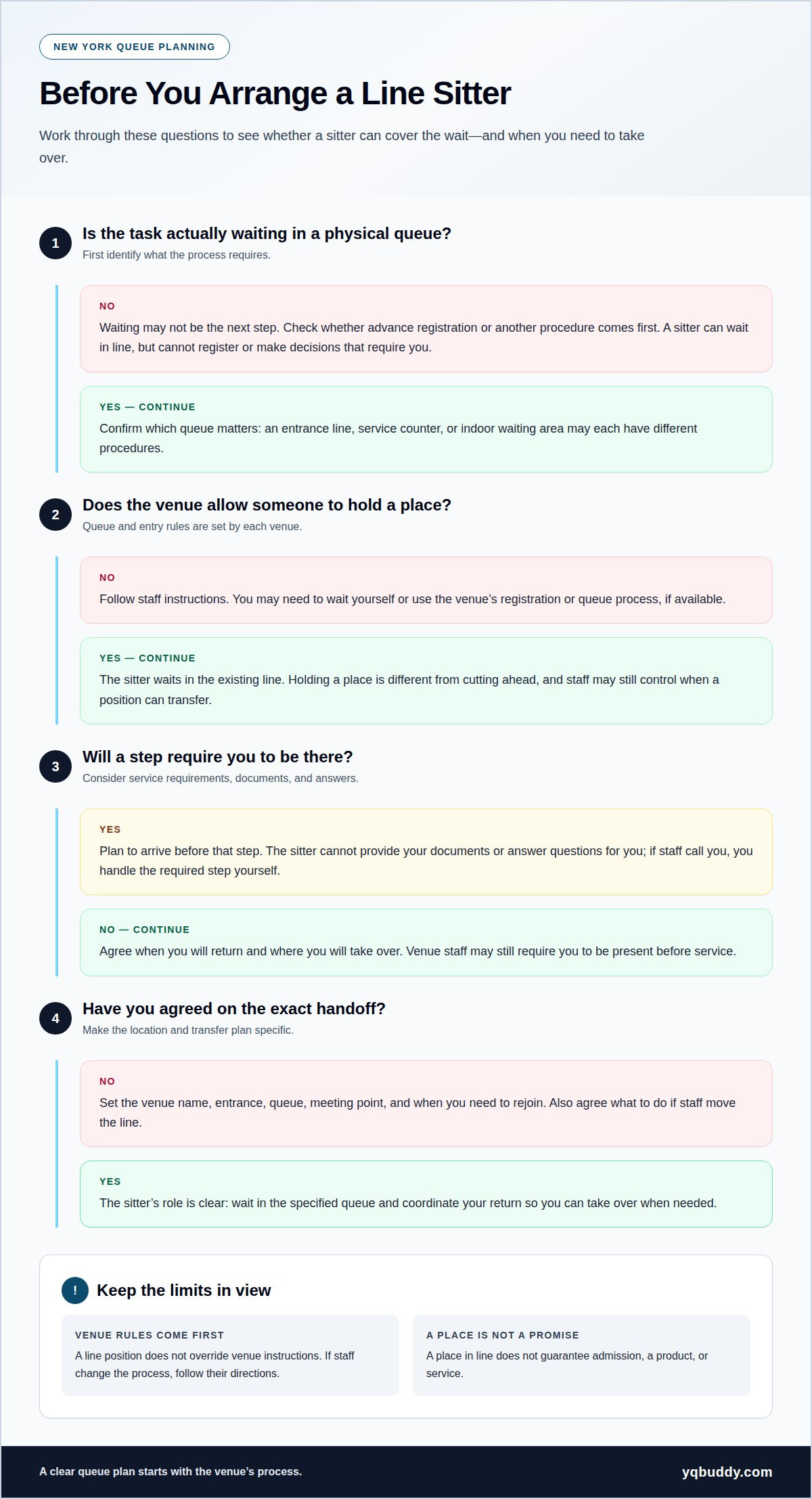
Administrative procedures can affect how a queue works. For example, a New York office may require advance registration before you join a physical line. First find out whether the task involves waiting in line, registering in advance, or being present for a specific step. A sitter can wait in a queue, but cannot register or make decisions that require you.
What rules do venues have about line-sitting or queue jumping? Each venue sets its own queue and entry procedures, so there is no single rule for every location. Staff may require the person receiving service to be present, limit place-holding, or control when a queue position can transfer. Holding a place is different from cutting ahead: the sitter waits in the existing line.
Before arranging a handoff, identify the New York venue, the queue, and when you need to arrive. At a government or visa office, distinguish waiting from steps that require your documents or answers. At a clinic or pharmacy, separate waiting in line from service steps that need your direct participation. Then agree on a handoff point, such as the entrance or end of the queue. If staff change the process, follow their directions. A line position does not override venue instructions, but a clear plan can keep the wait organized.
Polish line stander Tadeusz Żak lost his 13-year-old line-standing business in 2013 after local hospitals introduced advance registration. His experience illustrates how a change in procedure can remove the usefulness of waiting in a physical queue, even when someone is available to hold a place.
When arranging line-sitting, the key question is not just how long the queue may be, but whether the step you need happens in that queue. Find out how the process works before the wait begins. This helps you decide whether a sitter’s role fits or whether advance registration must come first.
Paid line-sitting services
A paid line-sitting service arranges for someone to wait in a queue on your behalf. In New York, the venue’s procedures determine whether a sitter can hold a place and when you need to arrive.
Booking and Preparation
Before the sitter starts waiting, agree on the task, location, and handoff plan. Share the New York venue name, entrance, queue details, and when you’ll take over. For a clinic visit, clarify whether the sitter is waiting outside or in a public queue. A line sitter waits in line, unlike a babysitter who cares for children, so define the task clearly.
For a New York office, event, or pharmacy, specify which queue matters. The entrance line may differ from a service counter or indoor waiting area. Tell the sitter where to stand and how you’ll find each other. A sitter can wait and coordinate, but can’t provide your documents or answer questions for you.
Holding a Place During an Absence
If you step away, the sitter stays in line to hold your place. Agree on where you’ll return and when you need to rejoin. Venue staff may require you to be present before service, so plan the handoff around their process. A place in line does not guarantee admission, a product, or service.
Assignments may involve waiting at a New York government office, event entrance, clinic, or pharmacy. The sitter waits in line and coordinates your return, but does not book appointments or purchase tickets. If staff call you, you’ll need to handle any required step yourself.
Identity checks and insurance are different things. ID verification can help identify a sitter, but it does not establish insurance coverage or guarantee reliability. Make the assignment clear: name the location, queue, and handoff point, then agree on what to do if staff move the line. This keeps the sitter’s role specific and makes your return easier to coordinate.
Part-time line sitters
A part-time line sitter takes limited queue assignments rather than working a full-time schedule. The task is to hold a place and coordinate a handoff. In New York City, an assignment might involve waiting near a government office, pharmacy, or product release. This differs from babysitting, which involves caring for children while parents are away. Define the role upfront so everyone understands what the work includes.
Each queue assignment has its own setting and handoff needs. A New York office may require you to arrive before a service step, while a consumer release may involve waiting outside a store. These are examples, not standard schedules. The agreed wait and handoff define the assignment, not an assumed shift length. Before accepting a request, the sitter should understand the location, queue, and expected transfer point.
What are alternatives to hiring a line sitter? You can wait yourself, ask someone you know to take a turn, or use the venue’s registration or queue process if available. For example, advance registration at an office may reduce the need to wait in person. Choose based on whether you can attend, what the venue requires, and whether someone else can cover the wait.
If you’re considering line-standing work, first understand the assignment. Identify the New York venue, where the queue forms, and how the handoff will happen. A pharmacy line and an event entrance may involve different instructions, so the task description matters. Keep the work focused on waiting and coordination. Don’t assume it includes paperwork, entry, or completing someone else’s transaction. A short term line sitter arrangement works best when both people agree on the exact queue and transfer point.
In American English, a sitter can also provide temporary or part-time care for an elderly person or a pet while the owner is away. That broader meaning describes care, not the queue assignment discussed here. In this context, line sitting means waiting and coordinating a handoff; care-related sitting involves an elderly person or a pet.
Queueing for consumer goods
Queueing for consumer goods means waiting in line to obtain or buy a physical product. For a limited release, someone may wait outside a store or event venue before sales begin. The queue is only one part of the purchase: the seller controls stock, access, and checkout. A place in line doesn’t guarantee that the item will still be available.
Polish line stander Tadeusz Żak once reported standing in a queue for 40 hours. That example shows how a consumer wait can stretch far beyond a quick errand. Before planning a handoff, identify the exact location and which line matters. A store entrance, a release queue, and a checkout line can be separate steps. Clear details help the sitter wait in the right place.
Make a simple plan. Identify the product release and venue, then establish where the queue begins and how you’ll find the sitter. Agree on when you’ll arrive and what the sitter should do if staff move the line. Keep the task focused on waiting and coordinating. The seller still decides whether the product is available and who can buy it.
Examples include waiting for a product drop, store opening, or public release event. Each setting may handle queues differently. Staff may direct people to a new entrance or ask them to move as a group. A sitter can follow the line, but don’t assume a place transfers automatically. Keep your phone available and make the handoff plan specific to the venue.
For a short wait, weigh the time you’d spend traveling, waiting, and returning against handling the queue yourself. If you’re buying an item for someone else, distinguish holding a place from making the purchase. A sitter can wait, but the buyer may still need to appear, follow store procedures, and complete checkout. These steps matter most when stock is limited or sales rules change during the event.
Keep the arrangement focused on the wait, not the item. That makes expectations clear if the line moves slowly, the entrance changes, or the product sells out before you arrive.
YQBuddy
YQBuddy connects you with a Buddy to hold your place in a queue while you handle other plans. Choose a Quick hold for brief coverage, a Standard hold for a longer wait, or Overnight camp for an overnight line. These options can suit queues at government and visa offices, events, clinics, pharmacies, and consumer releases.
Share the location and handoff details before accepting a hold so the Buddy knows where to wait and when you’ll take over. YQBuddy users are ID-verified, and payment is released after a confirmed handoff. The service covers waiting, not appointment booking, ticket purchasing, or guaranteed access to appointment-only venues.
If you want help with an upcoming queue, contact YQBuddy to discuss your line-sitting needs.
Make your next queue easier to plan
Before your next appointment or release, decide what you need covered and when you’ll take over. A short term line sitter can wait while you stay ready for steps that require your presence. Keep the handoff plan specific to the venue and queue.
YQBuddy coordinates line-standing requests through Quick hold, Standard hold, and Overnight camp. These options cover waiting, not appointment booking, ticket purchasing, or guaranteed access to appointment-only venues.
If you have an upcoming queue, contact YQBuddy about line sitting. A clear plan can make your next errand easier to manage.
Frequently Asked Questions
What is a short-term line sitter service?
A short-term line sitter service connects you with someone who waits in a queue on your behalf and coordinates a handoff so you can join when needed. In New York, for example, a Buddy might wait near a government office while you handle another errand. The service covers waiting, not appointment booking, ticket buying, or guaranteed entry. Venue procedures still determine how the queue works.
Is hiring a line sitter legal in my city or state?
Venue procedures vary. Staff may limit place-holding or require the person receiving service to be present. A sitter waits in the existing line and follows staff directions.
Where can I find a line sitter near me?
YQBuddy connects you with a Buddy to wait in a queue. Share the location and handoff details before accepting a hold.
