
Government-office queues can be among the hardest to hand off. You can hire someone to wait in line for events, product drops, and some public-office queues while you handle other tasks. They hold your place, but they cannot book an appointment or guarantee access.
Long waits are frustrating, especially when you need to be there in person for the next step. This guide explains what a line stander can handle, which people skills the role requires, and how event and government-office queues work. Use it to decide when a handoff makes sense and when you need to stay in line yourself.
Key Takeaways
- Line standers can help with event, product-launch, restaurant, and some office queues, but holding a place is different from booking an appointment or securing access.
- Clear communication, patience, and staying alert help a line sitter manage a wait and hand off the place smoothly.
- Event lines and government-office queues work differently, so understand what the queue requires before deciding whether you can step away.
- YQBuddy’s Quick hold, Standard hold, and Overnight camp options match different kinds of waits.
What can a line stander help with?
A line stander holds a place while you take care of something else. In New York, that could mean an event queue, a restaurant wait, or a public-office line.
Places Where Line Standers Help
A line sitter waits where position in a physical queue matters. Examples include Broadway rush-ticket lines, limited-edition sneaker releases, restaurants, clinics, pharmacies, and government or visa offices. In Manhattan, a line stander has waited for a table at Emilios Ballato while diners went to find an aperitivo. This can free you from standing, but it doesn’t replace any required appointment or personal appearance.
Rules vary by venue and queue. Before arranging a handoff, find out whether someone else can hold your place and what you must do when you arrive. A stand-in cannot turn a queue into a ticket purchase or an appointment. Other options include arriving earlier, joining a venue’s virtual queue, or using its reservation system when available.
Line-standing has also entered public debate. On October 18, 2007, Missouri Senator Claire McCaskill proposed making line-standing for registered lobbyists illegal. Professional line standers later held places for four days during the March 2012 Supreme Court hearings on the Affordable Care Act.
Hiring Services and Preparation
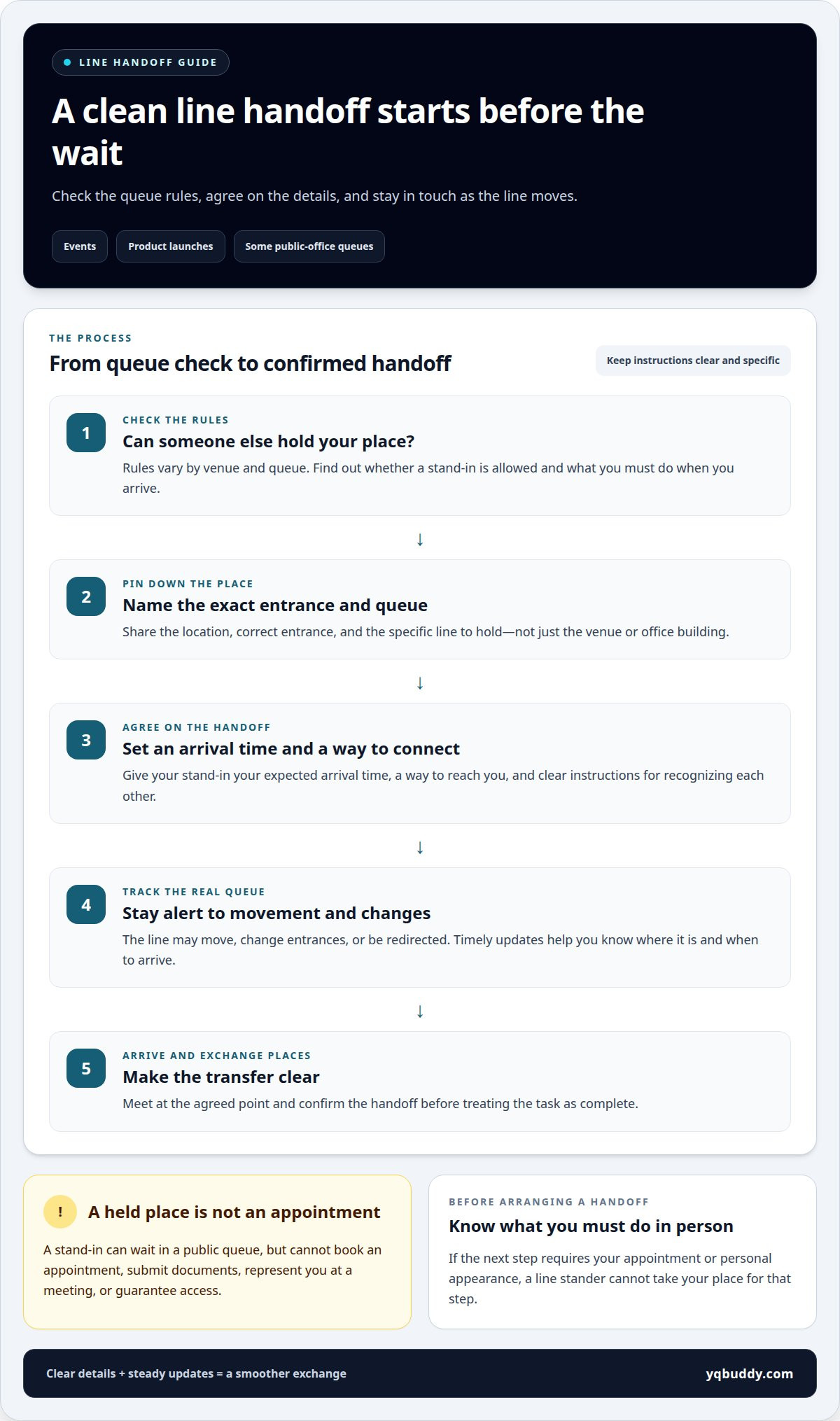
In the United States, line-standing platforms and task marketplaces connect people who need a place held with line sitters. Give your sitter the exact location, queue entrance, expected arrival time, a way to reach you, and clear handoff instructions. For a public office, specify the queue you need held rather than naming only the building.
Other options include joining the line yourself, arriving before it grows, or using an available reservation or virtual queue. To avoid scams, watch for unclear identities, vague meeting plans, and requests to pay outside the stated process. Use a service with ID-verified users, keep instructions in the agreed channel, and confirm the handoff before treating the task as complete.
Good line standers need patience, clear communication, and awareness of changes around them. Those skills matter in a crowded Broadway queue just as much as at a government office. Share the handoff details early so everyone knows where the place is being held and how the exchange will work.
The line-sitting job and required people skills
A line sitter does more than stand still. At a New York sample sale, they hold a place, follow the queue’s movement, and stay ready for your handoff. The role calls for patience, punctuality, clear communication, and attention to changing instructions. Without timely updates, you may not know where the line has moved.
Queue theory helps explain why lines move unevenly. Each person ahead must finish before the next can advance, while new arrivals may join behind you. A line sitter needs to track the actual queue, not just the time spent waiting. At a sample sale, for example, the right time for you to arrive depends on how far the line has progressed.
Professional line work can involve long stretches and changing conditions. In March 2012, the Supreme Court heard three days of oral arguments on the Affordable Care Act, while line standers held places for four days. That example shows why stamina and steady communication matter during major public events.
At a sneaker release or sample sale, the wait may begin before doors open. The sitter needs to know the correct entrance, the queue’s purpose, and your handoff plan. Some sales manage entry in stages, so clear updates help you arrive before your place is needed. The sitter should describe changes plainly rather than assume you can see the line.
The work involved depends on the wait and its demands. A short queue outside a store is different from an overnight wait. The person waiting gives up other uses of that time, while you can spend it elsewhere. Duration, start time, weather, and the queue’s pace all affect the task, but the goal stays the same: a smooth handoff.
Waiting also has a human side: roughly 70% of people will not wait more than 15 minutes in line. That reported figure helps explain demand, but each assignment still calls for practical skills. A reliable sitter stays alert, communicates changes, and hands over the place clearly.
Concert, event, and product-launch lines
A concert queue may form before doors open, while a product launch can draw shoppers to a store entrance. If you hire someone to wait in line, agree on the exact location and handoff before the event. Restaurant queues work differently: staff may call names or manage entry, so holding a place alone may not secure a table.
For a New York concert, identify the correct entrance, not just the venue address. Large venues may have separate queues for different gates or ticket types. Tell the stander which line matters and how you’ll recognize each other. A place in line does not include a ticket, admission, or a particular view.
Product launches bring another consideration. A sneaker release or limited-edition drop may have store-specific entry and purchase instructions. The stander’s role is to wait, not buy the product or promise that stock will remain. Share the launch name, storefront, queue location, and your arrival plan to make the handoff clear.
Timing matters at events because the queue may move as doors approach. Set a practical arrival point and keep communication open during the wait. If the line changes entrances or staff redirect people, the stander should tell you promptly. You can then decide whether to join the new queue or leave.
Long waits are part of this work. Polish professional line stander Tadeusz Żak said he once stood in line for 40 hours. That example shows how an event assignment can demand stamina and steady focus. For any concert or launch, agree on the task’s limits and handoff details before waiting begins, rather than leaving key decisions until the line moves.
Government-office and appointment queues
A government-office queue is not an appointment. A line stander can wait in a public queue, but cannot book a time, submit documents, or represent you at a meeting. In New York, the key question is whether you need someone to hold a place or must be present to complete the next step.
Before the wait begins, identify the exact office, entrance, and queue. Explain whether the line is for information, a walk-in service, or a numbered ticket. If the office uses tickets, clarify what the ticket does and when you need to arrive. Holding a place does not let you skip a step that requires your presence.
Appointments require particular care. A stand-in can wait outside or in a public line, but cannot attend an appointment as you or guarantee service. If staff call your name, request identification, or ask questions, you may need to be there yourself. The practical test is simple: can the queue position be handed over, or does the office need the applicant?
Advance registration can change the value of waiting. In 2013, a Polish professional line stander lost his 13-year business after local hospitals introduced advance registration. That example shows how a process can shift from a physical queue to a prior step. For New York offices, distinguish registration, appointments, and walk-in lines before arranging a stand-in.
Everyone involved in the handoff needs a clear plan. Give the line sitter the office name, queue purpose, meeting point, and your arrival details. Keep the task focused on waiting, not obtaining tickets, making decisions, or completing official business for you. If the office requires your personal attendance, go yourself. A line sitter cannot replace you.
Need a place held while you handle another task? Arrange a queue handoff.
YQBuddy
YQBuddy helps you arrange a line stander when waiting would take you away from other plans. Choose a Standard hold, Quick hold, or Overnight camp to suit the queue and the coverage you need. Payment is released after a confirmed handoff.
For a New York event, product drop, or office queue, share the location, queue purpose, and handoff plan. A line hold does not book appointments, purchase tickets, or guarantee entry to appointment-only venues. If an office requires you to appear in person, a stander cannot take your place.
If you need a handoff for a New York queue, contact YQBuddy to arrange line-standing.
Plan the handoff around your day
Before you hire someone to wait in line, decide when you want to rejoin and what you’ll do if plans change. Include that decision in the handoff instructions. Put the key details in one message, including a clear description of where you’ll meet. A defined endpoint keeps your day flexible without leaving the other person guessing.
Treat the wait as one part of your schedule. Leave time to reach the entrance, meet the line stander, and take over smoothly. For an office visit, plan the handoff around the task that requires you personally. For a public event, keep your next step simple and easy to communicate. You remain responsible for the parts only you can handle.
YQBuddy’s team understands the practical details behind line-standing handoffs. Share the queue and the plan you need, then decide what fits your day. Contact YQBuddy about line-standing and make your next long wait easier to plan.
Frequently Asked Questions
What should I include in a line-holding request?
Describe the queue’s purpose, the correct entrance, and the handoff point. For example, a request for a New York sneaker release should name the store and product drop, not just the neighborhood. Include any venue instructions that affect where the line forms. Clear details help the Buddy understand the task before arriving.
Can a line-waiter arrive earlier if needed?
You can request an earlier arrival when setting up the task, but agree on the timing before the wait begins. Starting earlier changes the assignment, so state the requested arrival time and give the Buddy the correct entrance and meeting point. If your schedule changes after the task is underway, communicate promptly rather than assuming the wait can be extended.
How do I get started?
To hire someone to wait in line through YQBuddy, open the app and describe the queue, location, requested timing, and handoff plan. Choose the hold type that fits the wait, then set your offer. For a New York clinic or event, include the exact entrance and explain how you’ll take over when you arrive.
How does it work?
Submit a line-holding request with the queue details and your offer. A Buddy can accept the task and wait in the specified line. Coordinate the handoff so you can take over the place. Payment is released after the handoff is confirmed. The service covers waiting in line, not buying tickets or completing an appointment for you.
Can a line sitter attend my government appointment?
No. A Buddy can hold a place in a queue, but cannot attend an appointment as you or complete official business on your behalf. For a New York office visit, separate the waiting from any step that requires you personally, such as answering questions or presenting documents. Plan to join the line before staff need you.
Is it okay to coordinate with more than one line-waiter for the same job?
It can work when each person has a separate task, such as waiting in different queues at different entrances. For one continuous queue, multiple standers may create confusion about who holds the place and who hands it over. Name one lead person, define any separate roles, and agree on a single handoff plan before the wait begins.
